
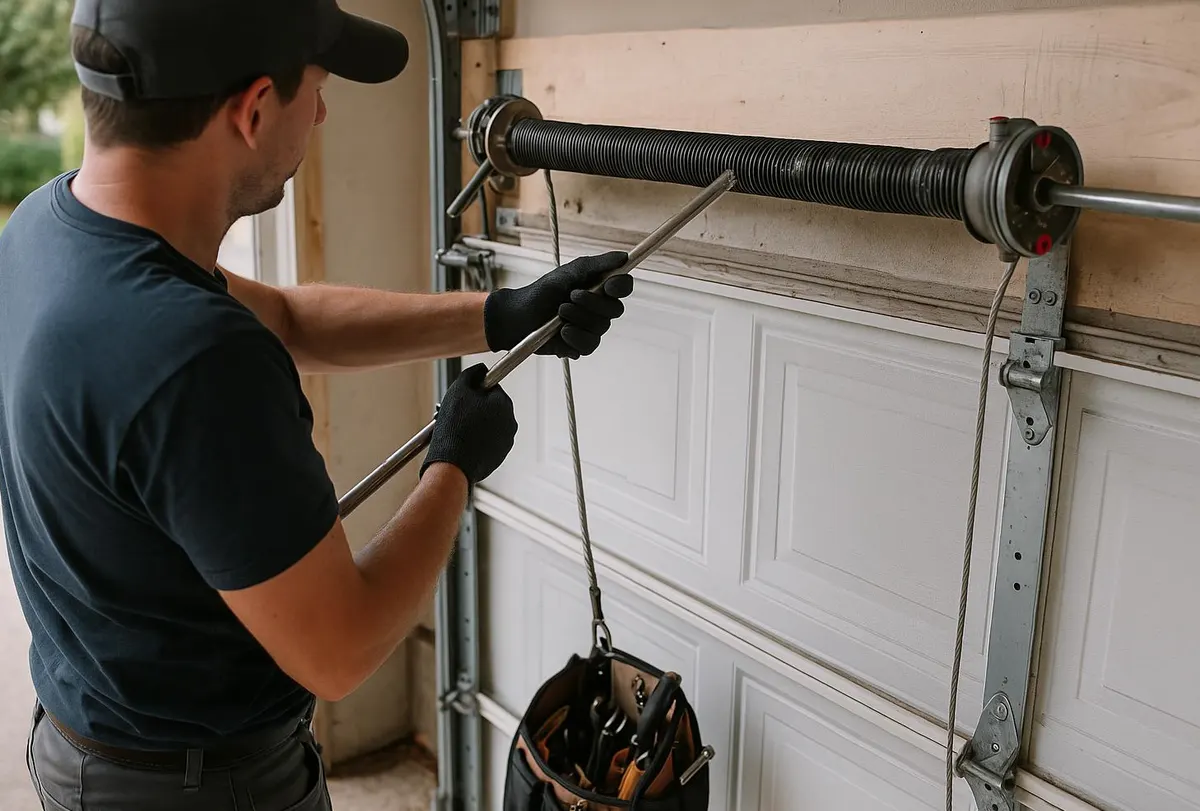
The Argument You're Having Right Now
One of you thinks the garage door is "just a little noisy." The other has noticed the cable near the bottom bracket looks like a frayed shoelace, or that the door shudders every time it opens. Here's the cost of letting that argument drag into next season: a worn roller left alone usually turns into an off-track door, and a frayed cable left alone usually turns into a door that drops suddenly, sometimes while it's halfway open with a car underneath it. Neither of those is a weekend DIY fix anymore. Both started as a quiet problem that got ignored.
What a Cable Actually Does
Your garage door doesn't lift itself. The springs do the heavy lifting, and the cables are what connect that spring tension to the bottom corners of the door. When a cable is healthy, it's smooth, tightly wound, and evenly tensioned on both sides. When it's failing, you'll see:
- Visible fraying — thin broken strands sticking out like a frayed rope, usually near the bottom roller bracket or the drum at the top
- Rust spots or discoloration along the cable length
- One side of the door sitting slightly lower than the other when closed
- A popping or snapping sound during operation
A frayed cable doesn't always snap all at once. More often it weakens gradually until it lets go under load, which is exactly when the door is heaviest and the spring is pulling hardest. That's why this isn't a "get to it eventually" repair. Cables are under constant tension and should only be handled by someone who knows how to safely release that tension first.
What a Worn Roller Looks and Sounds Like
Rollers are the small wheels that ride inside the metal track and let the door glide up and down. They take a beating every single time the door cycles, and in this climate they wear out faster than most homeowners expect. Signs your rollers are on the way out:
- Grinding or squealing that gets louder over weeks, not better with a quick spray of lubricant
- Visible wobble in the door as it travels, especially near the top of the track
- Flat spots or cracks on plastic rollers, or pitting and rust on metal ones
- The door catching or hesitating at the same spot every time
A worn roller that jumps the track doesn't just stop the door — it can bend the track itself, which turns a cheap roller swap into a track replacement.
Why This Wears Faster Near the Coast
Salt air speeds up corrosion on any exposed metal hardware, including cable strands and roller axles. Add in Volusia County's humidity and the afternoon downpours that roll through for much of the year, and you get a cycle where moisture gets into small nicks in the cable or roller bearing, rust takes hold, and the part weakens from the inside before it ever looks obviously bad from the outside. Garage doors here also work harder during hurricane season, when wind-load pressure puts extra strain on tracks, rollers, and cables every time the door is used.
What's Safe to Check Yourself
You can do a visual inspection without any risk:
- With the door closed and the opener unplugged, look at both cables from the bottom bracket up as far as you can see
- Check rollers for cracks, flat spots, or rust while the door is stationary
- Listen during a normal open-close cycle for grinding, popping, or uneven movement
- Note if one side of the door looks lower or the door seems to lean as it moves
What's not a DIY job: touching, loosening, or replacing the cables themselves. They're wound under spring tension, and releasing that incorrectly is how people get seriously hurt. The same goes for rollers near the top of the track, where you'd be working close to the spring system.
The Real Cost Comparison
A roller replacement, done as routine maintenance, is typically a modest repair — often well under $200 for a full set in national pricing ranges. A cable repair is a bit more involved but still a controlled, predictable job when caught early. Compare that to what happens after a failure: a dropped door can damage the panel, bend the track, or total a vehicle parked underneath. An off-track door from a seized roller can mean a new track and new rollers instead of just rollers. Waiting doesn't save money — it just moves the cost to a worse day.
When to Call Ormond Beach Garage Door
If you've spotted fraying, rust, wobble, or a door that sounds worse than it did last month, that's the point to call rather than wait for the next cycle to fail. Our team handles Garage Door Cable Repair with the proper tension-release tools, and we offer Garage Door Tune-Up & Maintenance visits that catch worn rollers, loose hardware, and early cable wear before they turn into an off-track emergency.
Settle the argument with a quick inspection instead of a guess. Call Ormond Beach Garage Door today and we'll have a technician out to check your cables and rollers before storm season puts them to the test.