
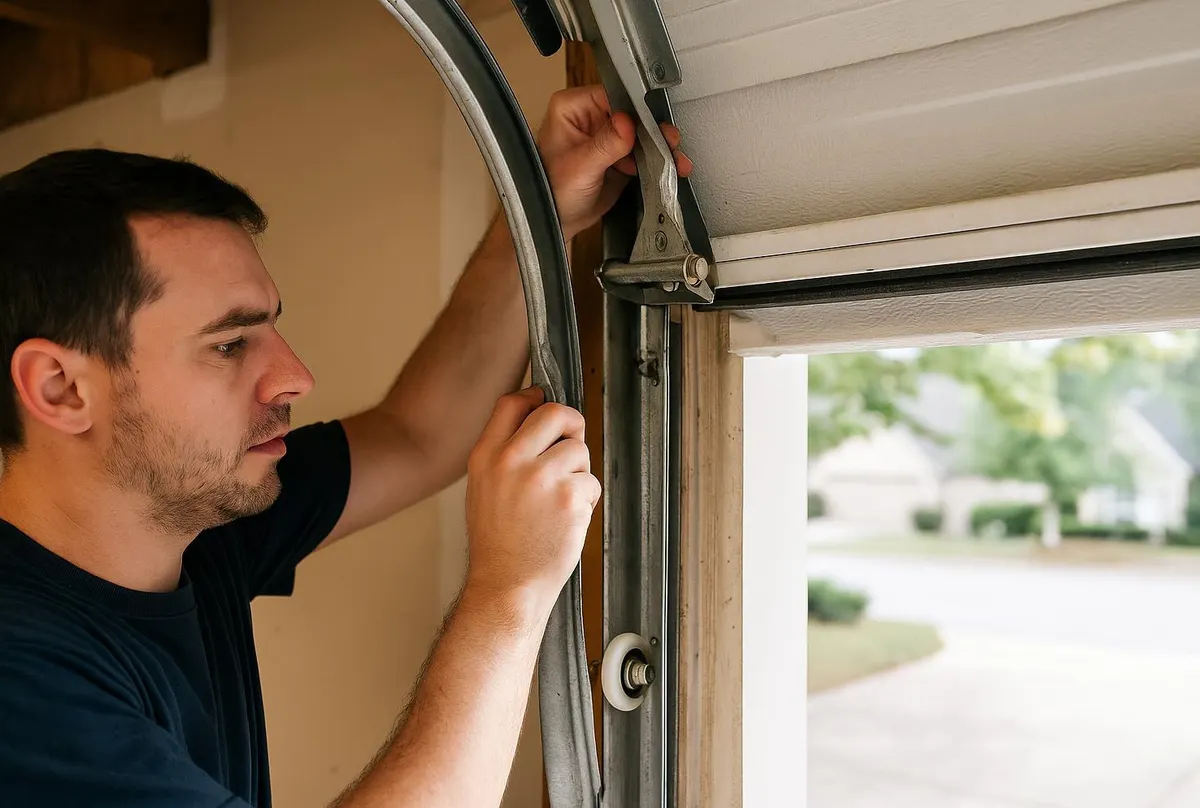
What Skipping This Does to Your Door
Put off lubrication through another humid season and you're not just risking a squeaky door. Salt air and moisture work on bare metal hinges, rollers, and springs around the clock, and dry metal-on-metal contact speeds that up. A torsion spring that grinds instead of gliding is wearing out faster than it should. Hinges that stick put extra strain on the opener, which can burn out a motor years before it needs replacing. Rollers that bind in the track are often the real reason a door looks "off track" when it's actually just fighting friction and rust. None of this shows up overnight, but by the time you notice grinding, shuddering, or a door that hesitates halfway up, the hardware has already been working harder than it should for months.
Tools You'll Need
- Silicone-based or lithium-based garage door lubricant (spray form is easiest to control)
- Clean microfiber rags
- A soft-bristle brush or old toothbrush for tight spots
- A sturdy stepladder
- Work gloves and safety glasses
Step-by-Step: Lubricating Your Garage Door
- Close the door and disconnect the opener. Pull the manual release cord so the door is fully under your control, and switch off power at the wall if you'll be working near the opener rail.
- Inspect before you lubricate. Look for rust on springs and hinges, frayed strands on the cables, and any gouges in the track. Lubricant won't fix damage, and spraying over a frayed cable just hides a problem that needs attention now, not later.
- Wipe down the tracks. Use a dry rag to clear dust, pollen, and salt residue from the vertical and horizontal tracks. Tracks should stay clean and dry; never lubricate them, as it only attracts grit that makes rollers bind.
- Lubricate the hinges. Spray a light coat at each pivot point where hinges meet the door panels, then work the door open and closed a few times by hand to let it soak in.
- Lubricate the rollers. If you have steel ball-bearing rollers, spray into the bearing itself, not the wheel surface that rides in the track. Nylon rollers generally need no lubrication on the wheel, only at the stem.
- Apply a light coat to the springs. A thin layer of lubricant on torsion or extension springs cuts down on the metal-to-metal friction that causes premature wear, especially once coastal humidity starts creeping into the garage at night.
- Lubricate the opener's drive rail or chain. A small amount where the trolley rides keeps the opener from laboring, which matters if your garage sits unshaded and heats up through the afternoon.
- Wipe off excess and run a test cycle. Open and close the door two or three times, listening for grinding or squeaking that didn't go away. Excess lubricant left on the surface just collects dust, so a final wipe-down keeps things clean.
Products to Use, and What to Skip
Stick with lubricants labeled specifically for garage doors, typically silicone-based or lithium-grease-based sprays. These hold up well in heat and don't gum up with dust the way heavier products can.
Avoid WD-40 as a long-term lubricant. It's a solvent and water-displacer, useful for loosening rusted bolts, but it evaporates quickly and leaves metal drier than before within a few weeks. Skip standard motor oil or household 3-in-1 oil too; both are thin enough to run off hardware and attract grime, which is a bigger problem near the coast where airborne salt is already working against your metal parts. And never grease the nylon roller wheels themselves or the track surface, since both of those should stay clean and dry for the door to ride smoothly.
Where to Draw the Line
Hinges, rollers, tracks, and the opener rail are safe, reasonable DIY tasks for most homeowners. Springs and cables are a different matter. A torsion spring holds enormous tension, and cables under load can snap unpredictably if they're already frayed or corroded. If your inspection turns up rust pitting on a spring, visible fraying on a cable, or a door that's noticeably crooked when it moves, that's a job for a technician, not a lubrication fix.
When to Call Ormond Beach Garage Door
If lubrication doesn't quiet things down, or you spot wear on springs and cables during your inspection, it's worth having it looked at before storm season winds put extra strain on a weakened system. Our Garage Door Tune-Up & Maintenance service covers a full hardware inspection along with proper lubrication, and if a spring or cable is past the point of a quick fix, our Garage Door Spring Repair and Garage Door Cable Repair services handle it safely.
If your garage door has been squeaking, sticking, or grinding, give Ormond Beach Garage Door a call. We serve homeowners throughout Ormond Beach, FL and can have a technician out to get your door running quietly again.